Sailing deep into the Weddell Sea, the chances of us spotting crabeater, leopard, or Weddell seals increase. Emperor penguins, which have been encountered on past voyages on the ice in this region, will also be more frequent the further south we venture. You will also likely spot humpback, orca, and minke whales, along with varying birdlife.
Ice conditions in the Weddell Sea vary seasonally. We will encounter a vast nautical wilderness, and as we head to extreme latitudes (far south), we will enjoy the raw beauty and power that make Antarctica so special. It will become apparent why it took so long to discover the White Continent and how tough it must have been for Shackleton's expedition.
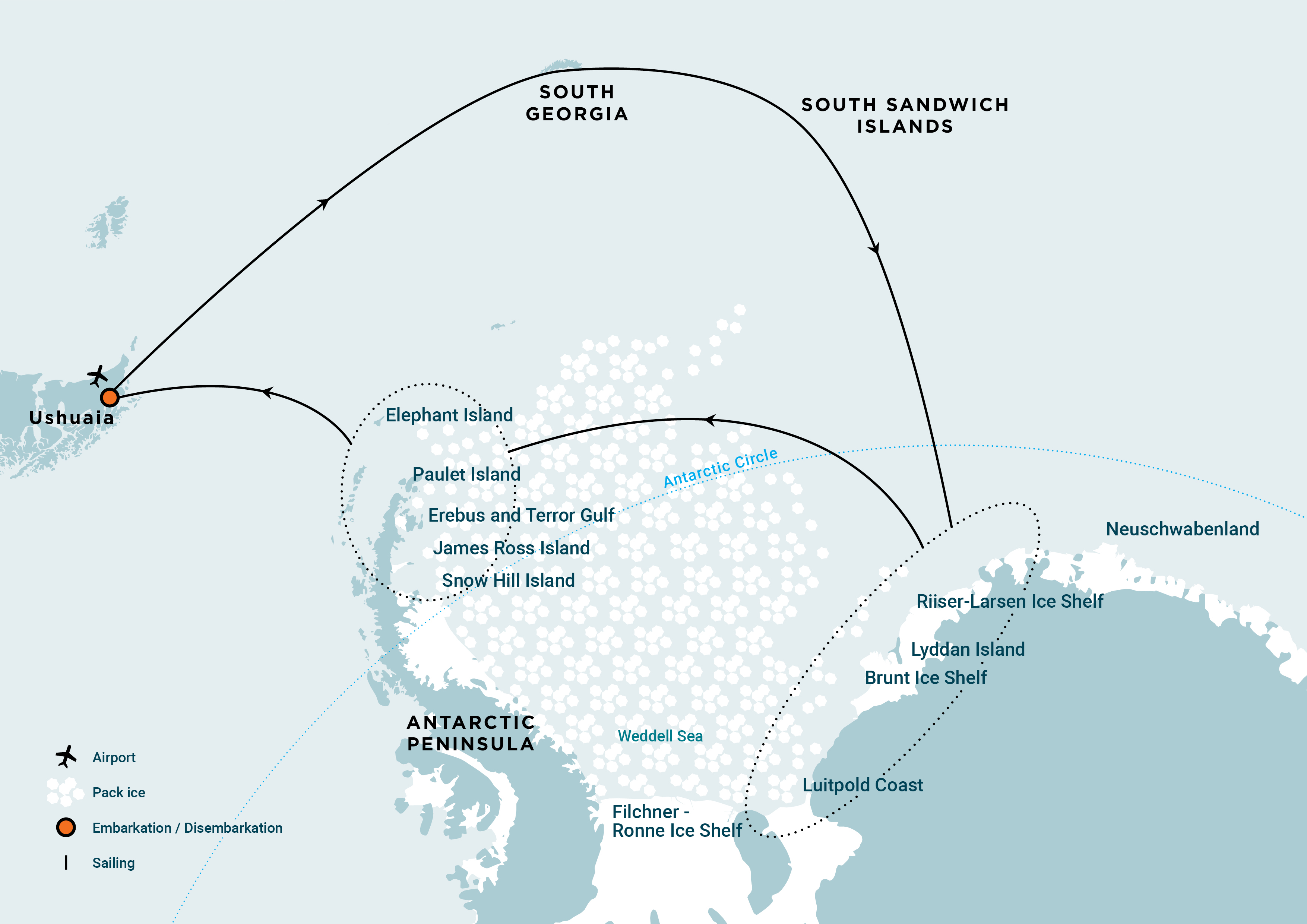
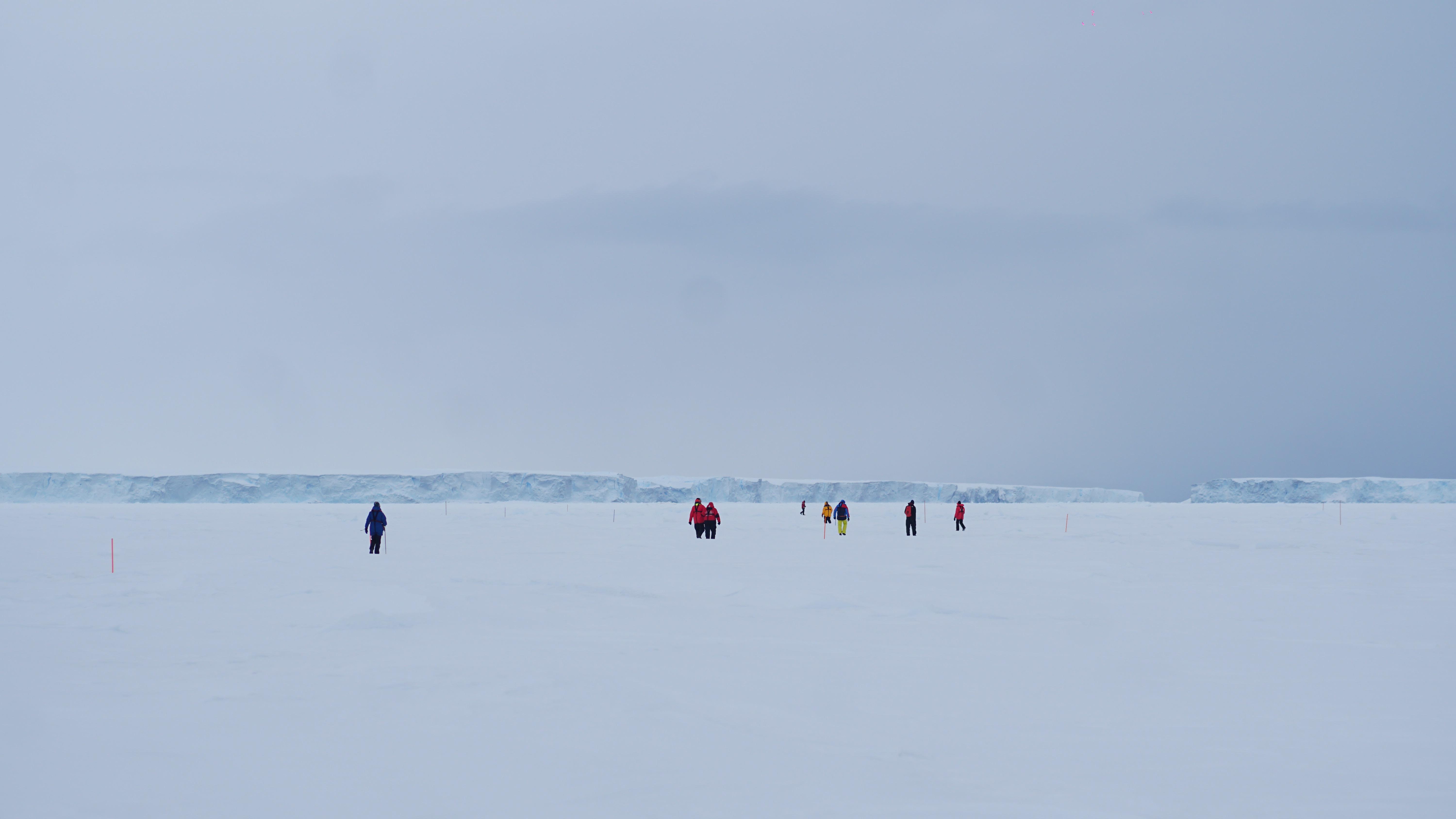
We'll make a circular route toward the Brunt Ice Shelf and along the Luitpold Coast, discovered and named during the second German Antarctic expedition (1911 – 1912) of Wilhelm Filchner. If conditions allow, we will have opportunities for a Zodiac cruise and possibly an ice floe landing. It is in this area that, for two seasons running, we set a farthest south world record in the Weddell Sea, reaching Vahsel Bay in the extreme south in 2025 and 2026.
We now head west toward the Filchner–Ronne Ice Shelf before changing course north, following the coast and the ice edge along the eastern side of the Antarctic Peninsula and Larsen Ice Shelf. This brings us close to the spot where Shackleton's vessel Endurance was trapped in pack ice during his Imperial Trans-Antarctic Expedition (1914-17), drifting toward the Antarctic Peninsula before ultimately sinking. The wreck was discovered on March 5, 2022, the 100th anniversary of Shackleton's burial, and 107 years after the ship sank beneath the ice. While we can't get close to the discovery site, we will be in the area where the ship was trapped and abandoned. With colonies of emperor penguins nearby, our chances of further encounters on the ice are good.