

Your voyage begins where the world drops off. Ushuaia, Argentina, reputed to be the southernmost city on the planet, is located on the far southern tip of South America. Starting in the afternoon, you embark from this small resort town on Tierra del Fuego, nicknamed “The End of the World,” and sail the mountain-fringed Beagle Channel for the remainder of the evening.
Deep South Basecamp experience
Antarctica | Antarctic CircleAntarctic Peninsula | Tripcode: OTL30b26
14 Days 13 Nights | Mar 04, 2026 - Mar 17, 2026
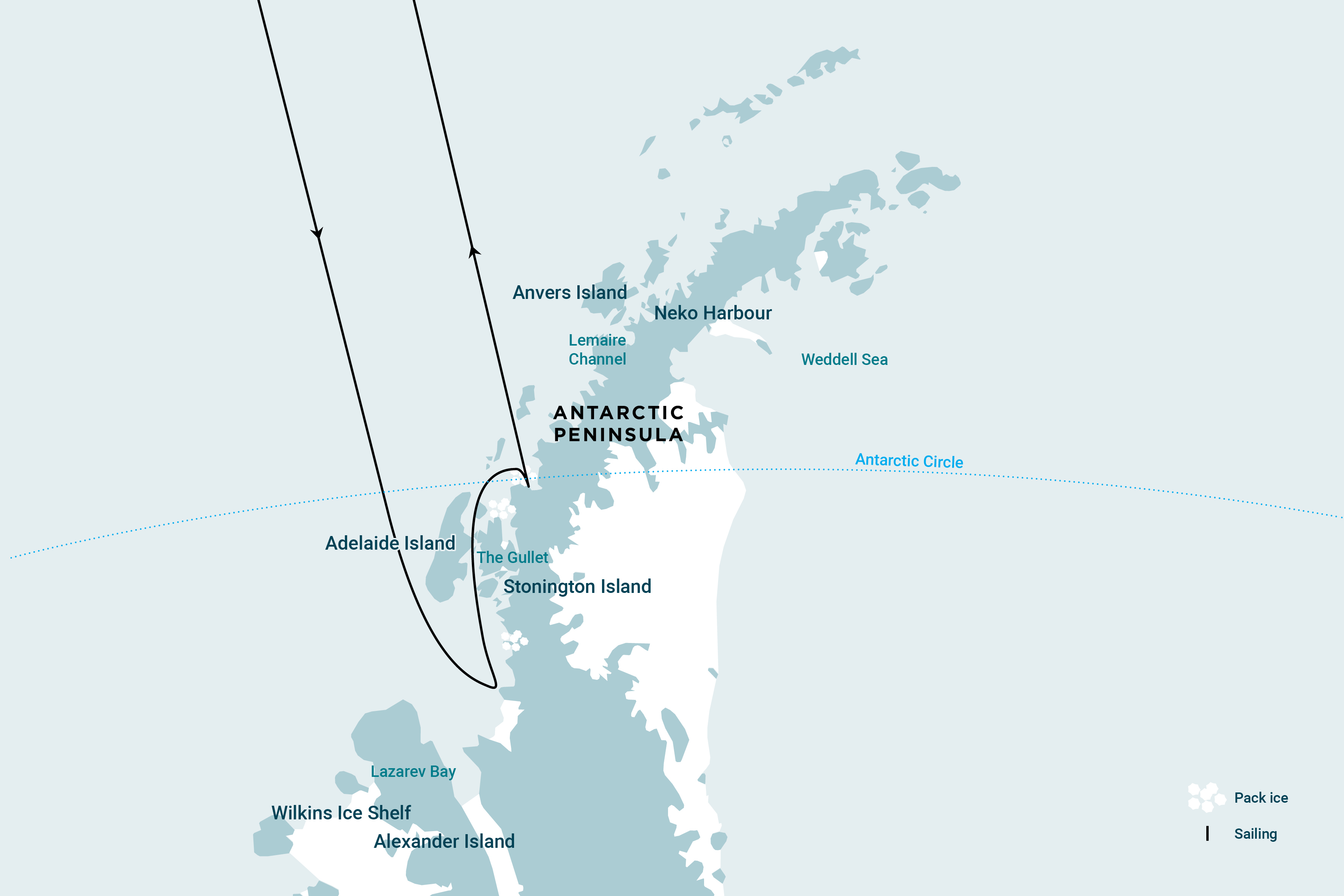
All itineraries are for guidance only. Programs may vary depending on ice, weather, and wildlife conditions. Landings are subject to site availabilities, permissions, and environmental concerns per IAATO regulations. Official sailing plans and landing slots are scheduled with IAATO prior to the start of the season, but the expedition leader determines the final plan. Flexibility is paramount for expedition cruises. The average cruising speed of our vessel is 10.5 knots.
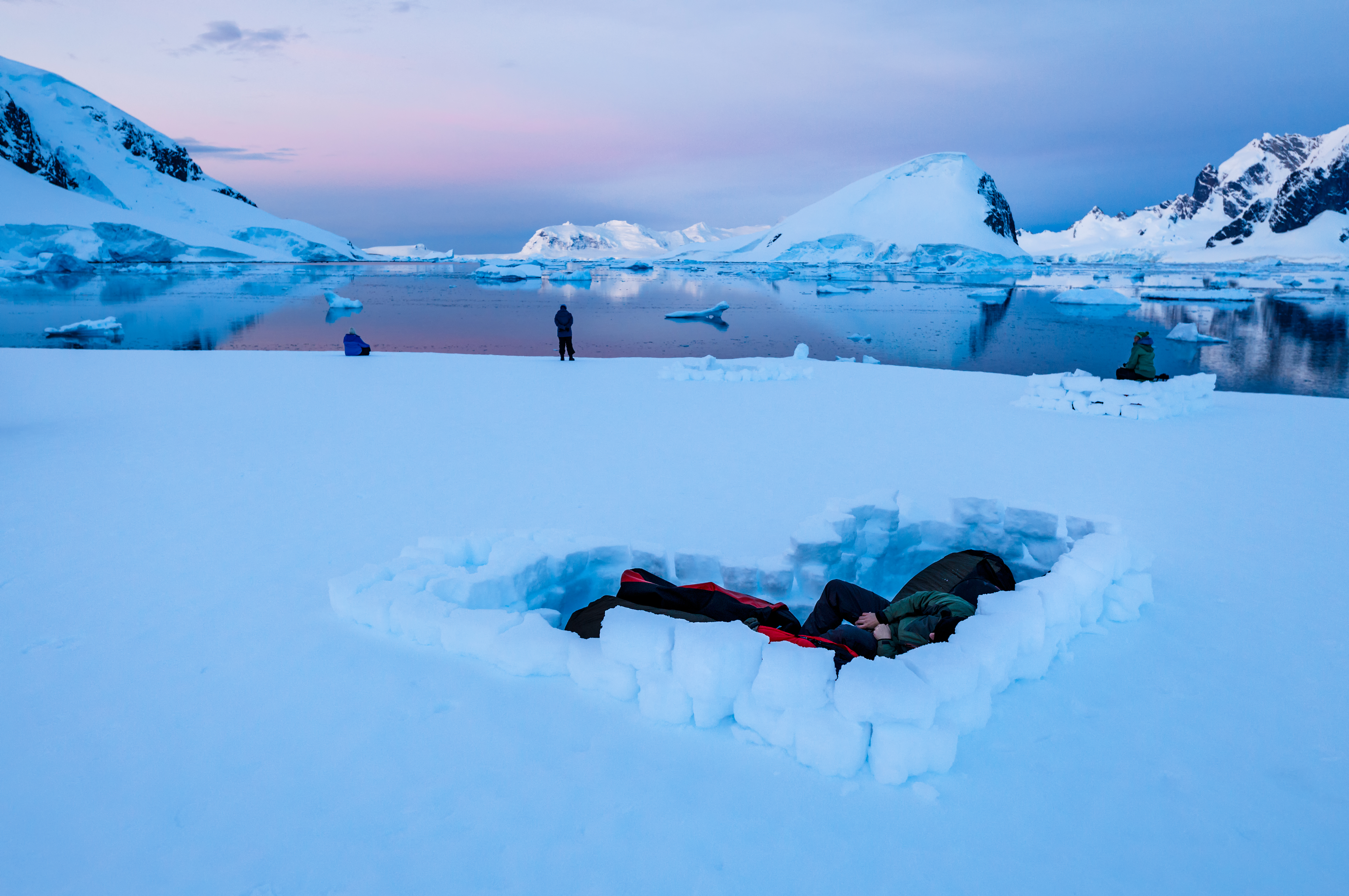
The Deep South Basecamp experience offers you a myriad of ways to explore and enjoy the Antarctic region. This expedition allows you to (long) hike, snowshoe, kayak, and even camp out under the Southern Polar skies.

Day 1
End of the world, start of a journey
Day 2 - 3
Path of the polar explorers
Over the next two days on the Drake Passage, you enjoy some of the same experiences encountered by the great polar explorers who first charted these regions: cool salt breezes, rolling seas, maybe even a fin whale spouting up sea spray. After passing the Antarctic Convergence – Antarctica’s natural boundary, formed when north-flowing cold waters collide with warmer sub-Antarctic seas – you are in the circum-Antarctic upwelling zone.
Not only does the marine life change, the avian life changes too. Wandering albatrosses, grey-headed albatrosses, black-browed albatrosses, light-mantled sooty albatrosses, cape pigeons, southern fulmars, Wilson’s storm petrels, blue petrels, and Antarctic petrels are a few of the birds you might see.
Day 4
Through the Pendleton Strait
Arriving at the Antarctic Peninsula near the Antarctic Circle. If sea ice conditions permit, you may continue through Pendleton Strait and attempt a landing at the rarely visited southern tip of Renaud Island. Here, you have the opportunity to encounter the first Adélie penguins of the voyage and enjoy spectacular views of icebergs in this surreal, snow-swept environment.
Later in the afternoon, we will continue our journey towards Adelaide Island and Marguerite Bay, crossing the Polar Circle. We will spend the night in the area of Crystal Sound, where the scenery is so captivating it may keep you awake into the early hours. This region also offers the chance to spot orcas, humpback whales, and minke whales.
Day 5 - 8
Marguerite Bay as a setting for activities
Over the coming days, we have the opportunity to experience a variety of planned activities in this incredible setting, deep in Antarctica.
Places you might visit include:
Horseshoe Island - Horseshoe Island is named for its distinctive shape. An abandoned research station here offers insight into the early days of scientific exploration, with original artifacts illustrating the stark contrast between life then and now. The hut is set amidst some of the most breathtaking scenery in Antarctica, offering views over the mountains and snow of Pourquoi Pas Island, as well as Horseshoe Island’s own rugged peaks. This is a photographic landing in every sense. Two old wooden boats still rest at the site, as if awaiting one final launch.
Pourquoi Pas Island - Discovered and charted by the renowned explorer Jean-Baptiste Charcot, Pourquoi Pas Island offers a scenic landing on a rocky beach set against the backdrop of the impressive Moider Glacier. A gentle walk from the landing site reveals stunning vistas, while Antarctic fur seals lounging just beyond the beach add a delightful wildlife encounter to our journey.
Stonington Island - A site of major research activity from the 1930s to the 1970s, Stonington Island hosted both American and British bases. It features a variety of historic buildings and artifacts that tell the story of early Antarctic exploration. Once connected to the mainland by snow and ice, this evocative site now stands as a poignant reminder of Antarctica’s isolation and the fragile interplay between human history and raw wilderness. The blend of wildlife, natural grandeur, and preserved structures makes this an unforgettable stop, sure to leave a lasting impression.
Red Rock Ridge - Located on the Antarctic mainland, Red Rock Ridge is distinguished by its vivid red-hued cliffs, which stand out sharply against the icy surroundings and are visible from afar. If conditions allow, we will attempt a landing here. We might encounter Adélie penguins and we also hope to spot seals and Antarctic shags that nest nearby.
Day 9 - 10
The Gullet and Detaille Island
If conditions allow, we then sail through The Gullet, one of the most impressive narrow channels in Antarctic, with towering mountains either side, birds following the ship and playful penguins and seals frolicking in the water as we sail through this very special part of the journey. If ice conditions allow we will also carry out a landing or cruise in the afternoon.
We may make a landing at an abandoned British research station here, taking in the island’s lofty position and imposing glaciers scenery.
Day 11 - 13
Familiar seas, familiar friends
Your return voyage is far from lonely. While crossing the Drake, you’re again greeted by the vast array of seabirds remembered from the passage south. But they seem a little more familiar to you now, and you to them.
Day 14
There and back again
Every adventure, no matter how grand, must eventually come to an end. It’s now time to disembark in Ushuaia, but with memories that will accompany you wherever your next adventure lies.















Asian Adventures Makes Astoundingly Memorable Tours and Safaris
How Can We Help ?
Sign In
Sign Up
Use the e-mail and password that you specified when registering on the site
Sign Up
Sign In
Fill in the registration form and save your favorite tours, synchronize them on all devices
Forgot password?
Use the e-mail and password that you specified when registering on the site
Book Now

Success
Your message was successfully sent. We will contact you shortly