

You touch down in Longyearbyen, the administrative center of Spitsbergen, the largest island of the Svalbard archipelago. Enjoy strolling around this former mining town, whose parish church and Svalbard Museum make for fascinating attractions. Though the countryside appears stark, more than 100 plant species have been recorded here. In the early evening, the ship sails out of Isfjorden, where you might spot the first minke whale of your voyage.
South Spitsbergen, Bear Island & Mainland Norway - Aurora Borealis
The Arctic | Svalbard | Tripcode: HDS15-27
6 Days 5 Nights | Sep 17, 2027 - Sep 22, 2027
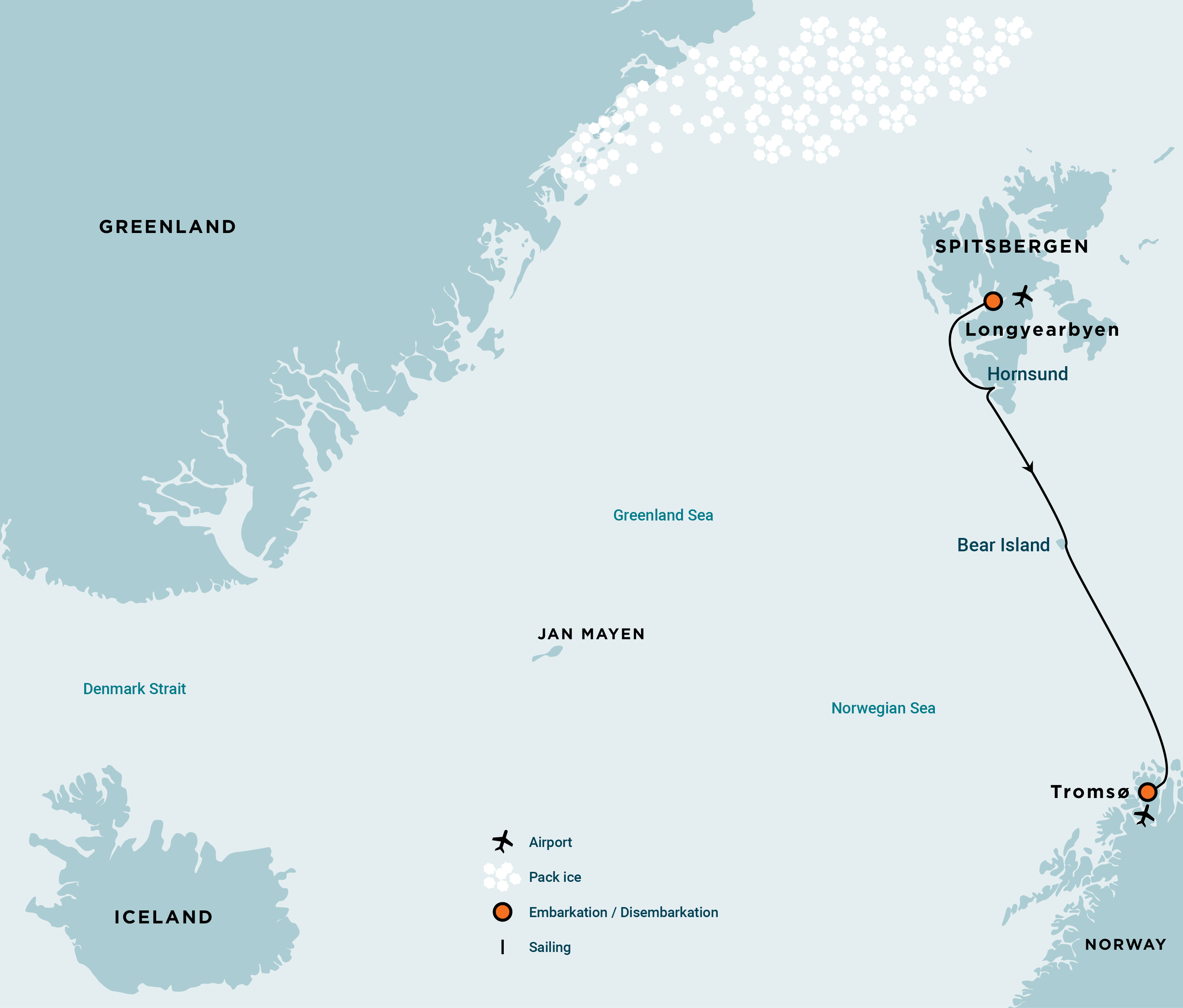
All itineraries are for guidance only. Programs may vary depending on ice, weather, and wildlife conditions. Landings are subject to site availabilities, permissions, and environmental concerns per AECO regulations. Official sailing plans and landing slots are scheduled with AECO prior to the start of the season, but the expedition leader determines the final plan. Flexibility is paramount for expedition cruises. The average cruising speed of our vessel is 10.5 knots.
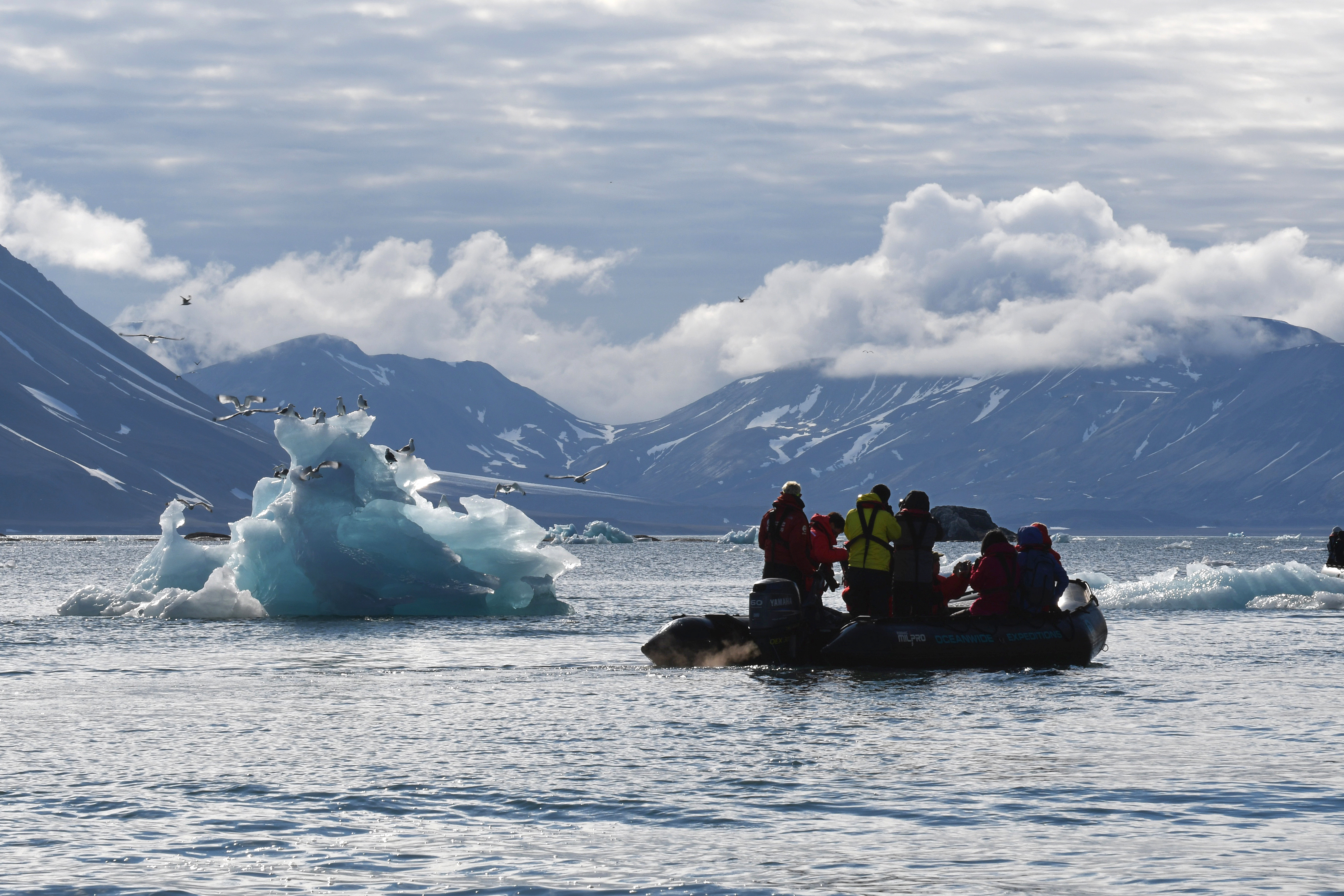
Chart an epic course from Iceland into the mazy fjords of Greenland and the beautiful world of the pack ice as you head north. Crossing the Greenland Sea, this combination cruise then takes you through the Svalbard Archipelago, exploring glaciers, mountains, and tundra, before crossing the Norwegian Sea and stopping at Bear Island en route.

Day 1
Longyearbyen - the start of your journey
Day 2
Spectacular Hornsund
We start the day by quietly cruising the side fjords of the spectacular Hornsund area in southern Spitsbergen, dominated by towering mountain peaks. The mountain of Hornsundtind rises to 1,431 meters (4,695 feet), while the peak of Bautaen testifies to why early Dutch explorers gave this island the name Spitsbergen, which translates to "pointed mountains." There are 14 magnificent glaciers in the area, and we have a fair chance of encountering seals and polar bears. All bird cliffs, which teemed with seabirds earlier in the season, have now departed, except some late fulmars. We will have the opportunity to take a Zodiac excursion to mighty Hornbreen and to set foot on Treskelen. Late in the evening, we depart from Hornsund.
Day 3
The limits of the Norwegian & Barents Seas
This is a good day to look for whales, seals, and migrating seabirds as we voyage south. Our route follows the limits of the Norwegian and Barents seas, both rich in marine life. It depends on the weather how fast we will proceed to Bear Island and sight its shores. From now on, darker skies provide opportunities to see the Aurora Borealis and the stars.
Day 4
Bear Island
Early in the morning, we arrived at the southeastern end of Bear Island. We can expect to see gannets and fulmars here. It is a good time to see migratory Arctic birds moving south. We will sail northeast by Sörhamna, where all breeding ledges are deserted, to Revdalen, where we land and may still encounter great skuas, large seabirds, known to be fiercely territorial. From there, we may climb some way up to the bird mountain at the coast for great views.
In Kvalrossbukta, we will land at the remains of a whaling station from the early 19th century. As we continue a little north along the (usually calm) east side of Bear Island, we will look for other good landing spots. Depending on the weather, we may also approach Bear Island from the northeast and sail south along the east coast. Late afternoon, we depart for Norway.
Day 5
At sea
This is another good full sea day to look for whales and migrating seabirds as we sail toward Norway. The nights grow ever-longer, making displays of the Northern Lights more frequent and vivid.
At the end of the day, we may glimpse the first sign of land in the south.
Day 6
Tromsø
In the early morning, we sail through straits and fjords to Tromsö, the capital of the northern province of Troms. There are many reasons Norway's fjords are world-renowned, and today you get a glimpse of them. We say goodbye with memories made!















Asian Adventures Makes Astoundingly Memorable Tours and Safaris
How Can We Help ?
Sign In
Sign Up
Use the e-mail and password that you specified when registering on the site
Sign Up
Sign In
Fill in the registration form and save your favorite tours, synchronize them on all devices
Forgot password?
Use the e-mail and password that you specified when registering on the site
Book Now

Success
Your message was successfully sent. We will contact you shortly