

You touch down in Longyearbyen, the administrative center of Spitsbergen, the largest island of the Svalbard archipelago. Enjoy strolling around this former mining town, whose parish church and Svalbard Museum make for fascinating attractions. Though the countryside appears stark, more than 100 plant species have been recorded here. In the early evening, the ship sails out of Isfjorden, where you might spot the first minke whale of your voyage.
South Spitsbergen Explorer - Bear Island - Diving (supplemented)
The Arctic | Svalbard | Tripcode: OTL08-27
10 Days 9 Nights | Jul 10, 2027 - Jul 19, 2027
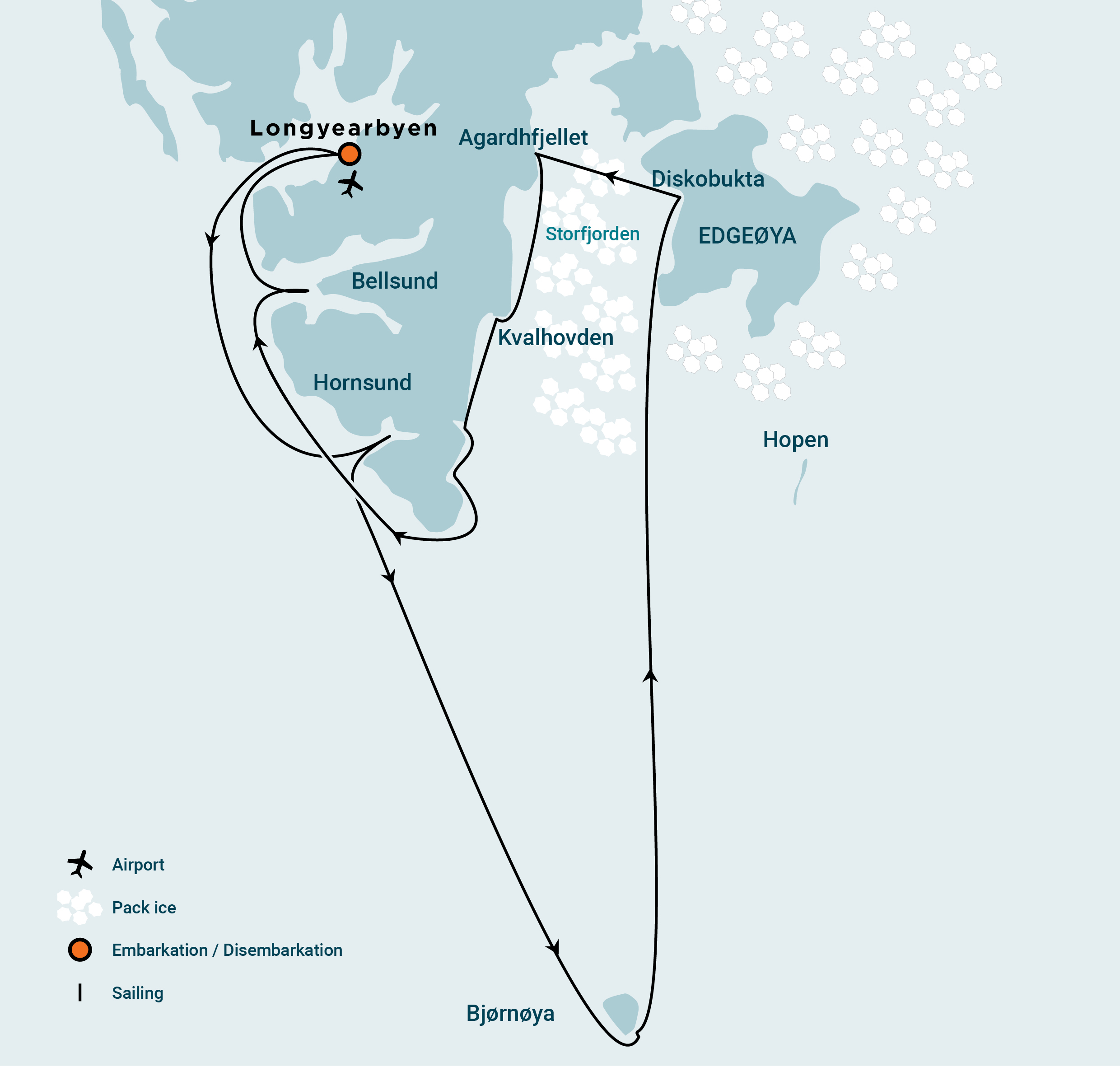
All itineraries are for guidance only. Programs may vary depending on ice, weather, and wildlife conditions. Landings are subject to site availabilities, permissions, and environmental concerns per AECO regulations. Official sailing plans and landing slots are scheduled with AECO prior to the start of the season, but the expedition leader determines the final plan. Flexibility is paramount for expedition cruises. The average cruising speed of our vessel is 10.5 knots.
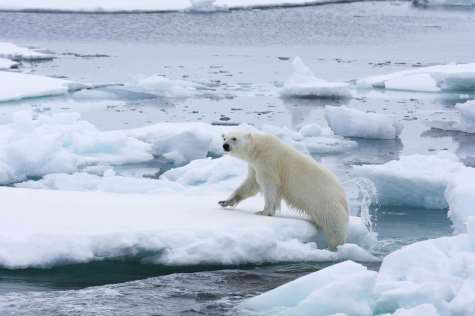
Across 9 nights, prepare to explore southern Spitsbergen, the largest island in Svalbard and home to a plethora of Arctic wildlife. From walrus haul-outs and encounters with the king of the Arctic, you'll glimpse the drama of life in one of Earth's most extreme environments. Then, visit remote Bear Island as you voyage to Norway's beautiful far north beneath aurora-filled night skies.

Day 1
Longyearbyen - the start of your journey
Day 2
Spectacular Hornsund
We start the day by quietly cruising the side fjords of the spectacular Hornsund area in southern Spitsbergen, dominated by towering mountain peaks. The mountain of Hornsundtind rises to 1,431 meters (4,695 feet), while the peak of Bautaen testifies to why early Dutch explorers gave this island the name Spitsbergen, which translates to “pointed mountains.” There are 14 magnificent glaciers in the area, and we have a fair chance of encountering seals and polar bears. The nearby cliffs of Sofiakammen are also home to thousands of pairs of nesting kittiwakes and little auks. In the evening, we might see thousands of harp seals rutting on ice floes at Sørkapp.
Day 3 - 4
The seabird colonies of Bear Island
Today, we venture along the west side of Bear Island, heading toward the southeast- an excellent place for viewing large seabird colonies. The nearby nesting cliffs are part of an extensive nature reserve where shore landings are not permitted. Afterward, we’ll sail northeast into Sörhamna, where we can get closer to the seabird cliffs. Chiefly, Brünnichs guillemots, kittiwakes, and fulmars nest here.
Just northeast of this is Revdalen, where, at a safe distance, we can watch breeding great skuas, large seabirds known to be fiercely territorial. From there, we may climb some way to the bird mountain at the coast. In Kvalrossbukta, we will land at the remains of a whaling station from the early part of the previous century. As we continue north along the east side of Bear Island, we will look for other good landing and activity spots.
Day 5
Along and through the pack ice
Sailing northward, we may still encounter sea ice, where we have a good chance of spotting polar bears as well as various species of whales, seals, and seabirds. Sailing along the western side of the Tusenøyane, we may see polar bears, walruses, and belugas.
Day 6
Kittiwakes & hiking in Diskobukta canyon
We land at a beach dotted with bones of prehistoric bowhead whales and walk to a canyon with over 10,000 pairs of breeding kittiwakes on both sides, and often Arctic foxes preying on eggs, and sometimes a polar bear. The valley south of the colony is inviting for long walks.
Day 7
The ivory gulls of Agardhfjellet
We land at the east coast of Spitsbergen at the mouth of Skjolddalen river, where ivory gulls gather to breed. Then, a relaxed walk takes us to the summit of Fleinskallen (about 300 m high), with some tens of breeding Ivory Gulls spread along the ridges. Here it pays to keep one eye on the ground at your feet - the area is very rich in fossils, such as belemnites.
Day 8
Dinosaurs and seabird colonies at Kvalhovden
The area around Boltodden is famous for its preserved dinosaur fossil tracks. Behind these are the steep bird mountains of Kvalvaagen, home to many thousands of Brünnich’s Guillemots and other seabirds. At Kvalbreen, we have a good opportunity for a Zodiac cruise and seal observations. Polar bears are not uncommon in this area, so keeping your camera handy here is a must.
Day 9
Bellsund’s flora, fauna, and haunting history
Bellsund is one of the largest fjord systems in Svalbard. Here, there are excellent opportunities to enjoy both history and wildlife. A possibility is Ahlstrandhalvøya, at the mouth of Van Keulenfjorden, where piles of beluga skeletons can be found, remains of poorly managed 19th-century whaling. Thankfully, belugas were not hunted to extinction, and we have a good chance of encountering a pod. Alternatively, while cruising the side fjords of Bellsund, you can explore the tundra where reindeer like to feed, as well as rock slopes where little auks breed, near Vaarsolbukta.
Day 10
There and back again
Even the most remarkable journeys must eventually come to an end. We disembark today in Longyearbyen, taking home memories that will accompany us wherever the next adventure lies. Here, you can further explore the town or prepare for your onward flight.













Asian Adventures Makes Astoundingly Memorable Tours and Safaris
How Can We Help ?
Sign In
Sign Up
Use the e-mail and password that you specified when registering on the site
Sign Up
Sign In
Fill in the registration form and save your favorite tours, synchronize them on all devices
Forgot password?
Use the e-mail and password that you specified when registering on the site
Book Now

Success
Your message was successfully sent. We will contact you shortly

Request a Meeting
Fill in the details and we'll get back to you within 24 hours
